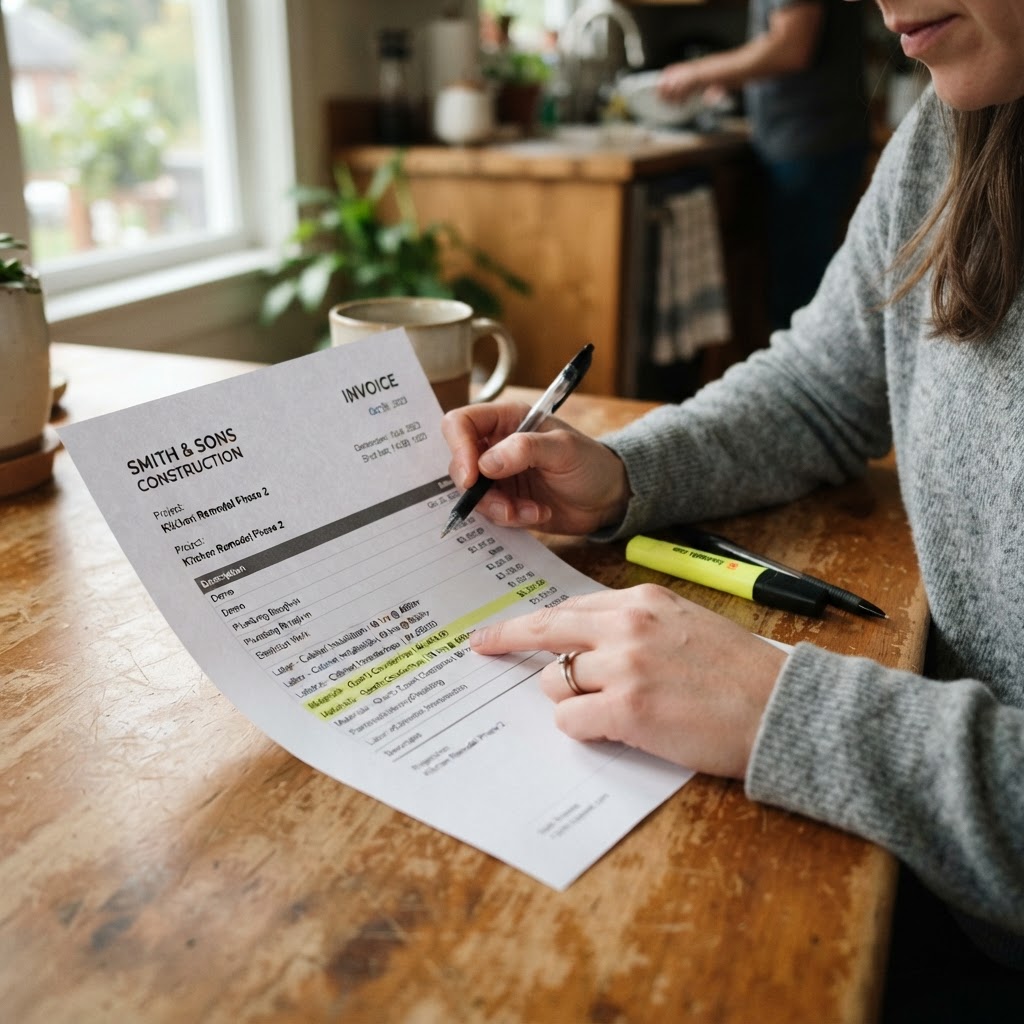
Most homeowners receive a contractor invoice and write a check. It's a document full of line items you're not trained to decode, and contractors know it. Whether it's intentional overcharging or honest billing errors, the effect on your wallet is the same. Here are the seven flags that should stop you cold before you pay.
1. Vague Line Items ("Miscellaneous Labor")
Any line item that says "miscellaneous," "general labor," or "project management fee" without specifics is a problem. Legitimate invoices itemize every task. Vague descriptions are often a catch-all for inflated charges that can't withstand scrutiny.
2. Material Markups Buried in Labor Rates
A contractor buys drywall at $12/sheet and bills you $22/sheet, then also charges a "markup fee" on top. Double-dipping on markup is one of the most common overcharges in renovation billing. Material costs should be transparent, and any markup should be clearly stated and agreed to in your contract.
3. Work That Was Never Done
Billing for tasks that weren't completed — or were completed by someone else — happens more than homeowners realize. Always compare the invoice against your project checklist and walkthrough notes.
4. Duplicate Billing Across Invoices
When you're managing multiple invoices over a multi-month project, it's easy to miss when the same work appears twice. Track invoice numbers and date ranges carefully.
5. Front-Loading Payment Schedules
If a contractor wants 50% upfront or a heavy payment before substantial work is complete, that's a significant risk. Industry standard is milestone-based payments: you pay when defined phases are done, not before.
6. Prices That Don't Match the Original Quote
Line items should match your approved quote unless a change order was formally issued and signed. If your electrician quoted $8,500 and bills $11,200 with no change order documentation, push back immediately.
7. Lien Waiver Missing at Final Payment
Before issuing final payment, always require a signed lien waiver from your contractor and all subcontractors. Without it, subs who were never paid by your GC can place a mechanic's lien on your property — even if you paid the GC in full.
RenoSpend automatically scans every invoice for these red flags, flags pricing anomalies against market benchmarks, and alerts you before you pay.